









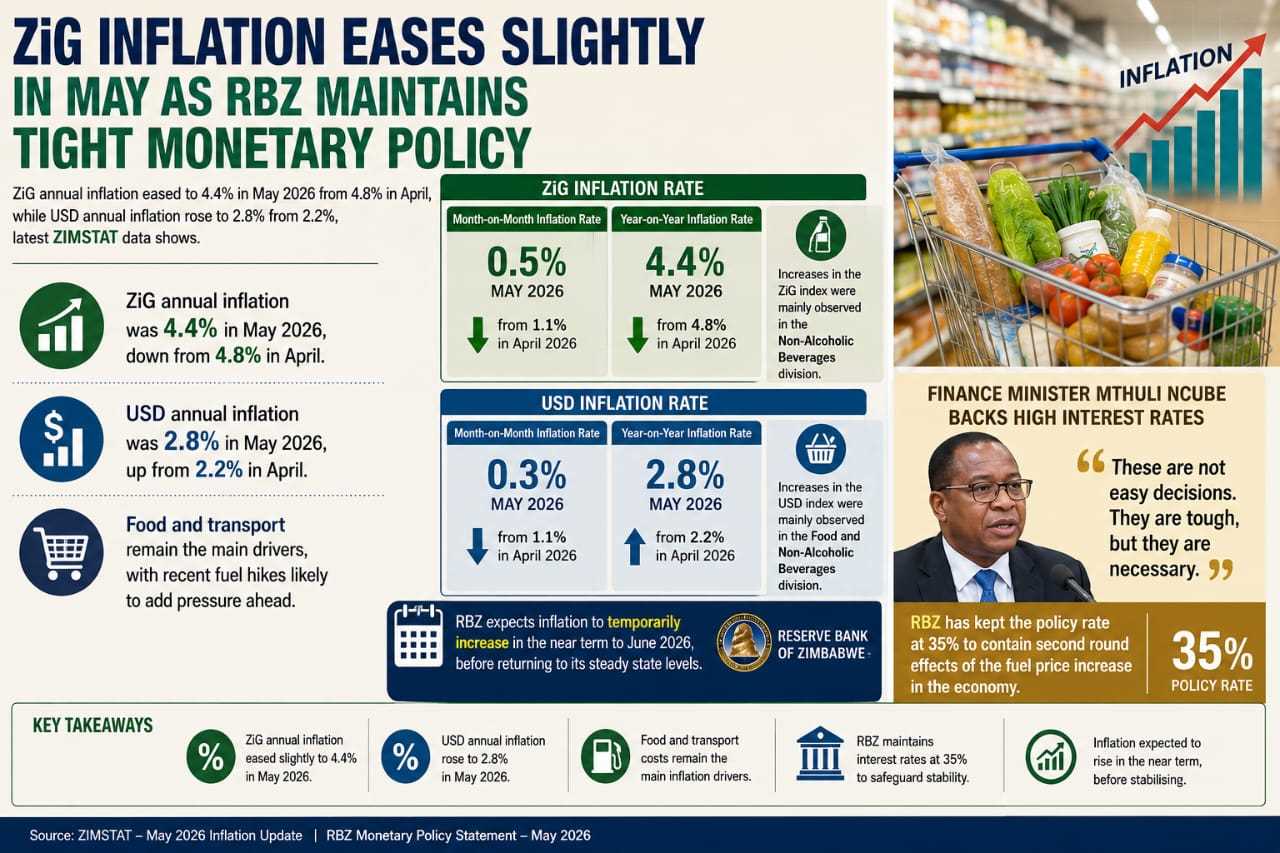
Zimbabwe’s annual inflation in the ZiG currency eased marginally to 4.4% in May, down from 4.8% in April, while United States dollar inflation rose to 2.8% from 2.2%, signalling continued underlying price pressures across segments of the economy despite tight monetary policy measures.
Latest figures released by the Zimbabwe National Statistics Agency (ZIMSTAT) also show that month-on-month ZiG inflation slowed to 0.5% in May from 1.1% in April. In contrast, month-on-month USD inflation declined to 0.3% from 1.1% over the same period.
ZIMSTAT said price increases in the ZiG economy during May were largely driven by the non-alcoholic beverages category, while USD inflationary pressures were mainly influenced by food and non-alcoholic beverages.
The data comes at a time when authorities continue to maintain a cautious stance on monetary easing, with Finance Minister Mthuli Ncube supporting the Reserve Bank of Zimbabwe’s decision to keep interest rates at 35%.
“These are not easy decisions. They are tough, but they are necessary,” Ncube said recently, defending the central bank’s policy position.
Related Stories
The latest inflation readings reflect a mixed trend, with ZiG inflation showing a slight slowdown after a gradual rise in previous months. Annual ZiG inflation increased from 3.8% in February to 4.4% in March, 4.8% in April and now 4.4% in May. USD inflation, meanwhile, rose steadily from 0.9% in February to 1.3% in March, 2.2% in April and 2.8% in May.
Food and transport costs continue to be key drivers of inflation, with recent fuel price adjustments expected to add further pressure to pricing across goods and services in the coming months.
In its latest quarterly monetary policy statement, the Reserve Bank of Zimbabwe said inflationary pressures are expected to remain elevated in the short term before stabilising later in the year.
“The Reserve Bank expects inflation to temporarily increase in the near term to June 2026 before returning to its steady state levels,” the central bank said.
Despite growing calls from industry players for lower borrowing costs to ease pressure on businesses and stimulate production, the RBZ has maintained its benchmark policy rate at 35%, arguing that the tight stance is necessary to contain secondary inflation effects, particularly those linked to fuel price increases.
Zimbabwe’s monetary authorities have maintained a restrictive policy framework since the introduction of the ZiG currency in April 2024, prioritising exchange rate stability and inflation containment after years of currency volatility.
However, the high interest rate environment continues to draw criticism from the private sector, with businesses arguing that elevated borrowing costs are limiting investment, production expansion and access to affordable working capital.





Leave Comments